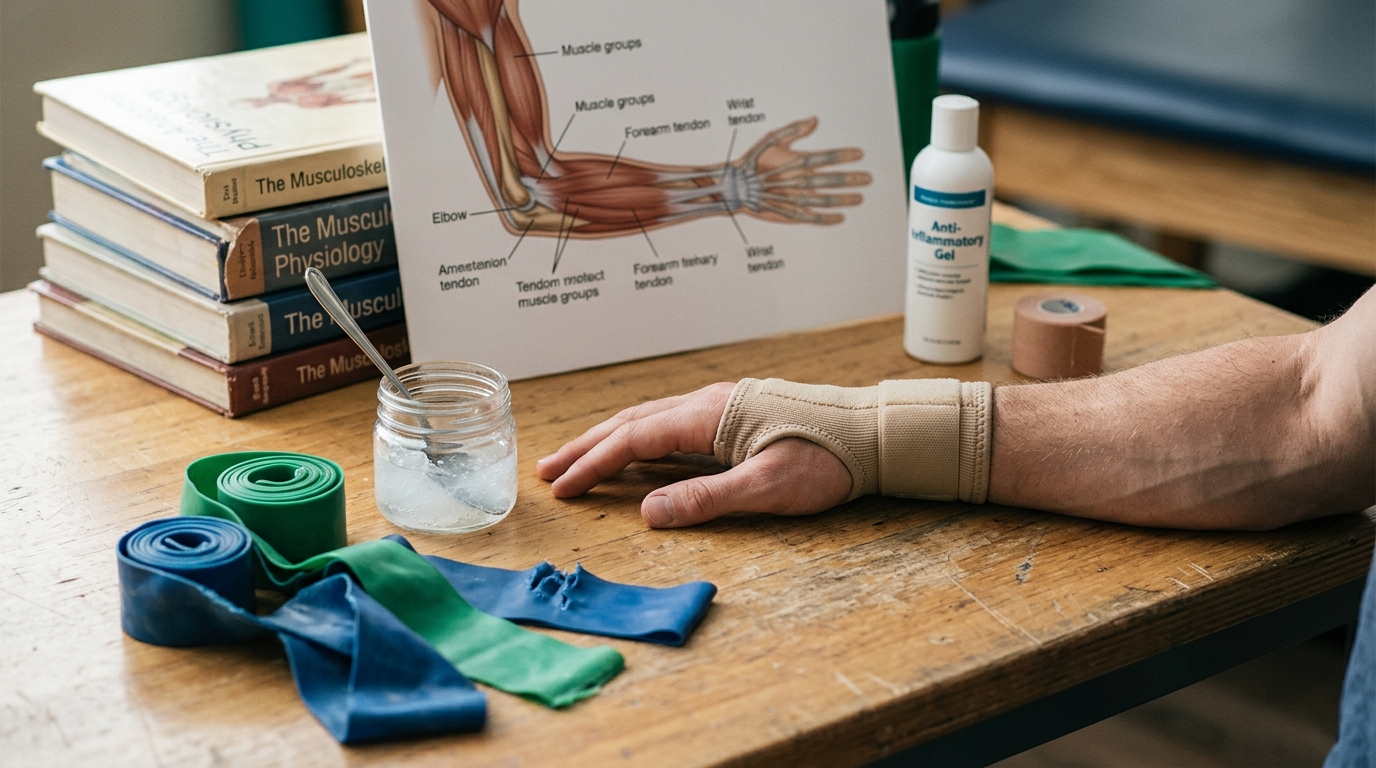
Tendinitis vs. Tendinosis
Tendinitis is acute inflammation of tendons, typically following sudden overuse or injury. It causes pain, swelling, and heat. Most acute tendon problems are actually tendinitis.
Tendinosis involves chronic degeneration without significant inflammation. It develops gradually from repetitive strain and inadequate recovery. Histologically, it shows disorganized collagen structure and microtearsrather than inflammation.
How Overuse Injuries Develop
Tendons adapt to demands placed on them, but adaptation takes time. Sudden increases in activity, repetitive strain without adequate recovery, or excessive loading overwhelm adaptation capacity, causing injury.
Common Sites
- Rotator cuff (shoulder)
- Patellar tendon (knee)
- Achilles tendon (heel)
- Extensor carpi radialis (tennis elbow)
- Flexor carpi radialis (golfer's elbow)
Acute Treatment
Rest: Reduce activity that aggravates symptoms. Complete immobilization isn't necessary—gradual return to pain-free activity is better.
Ice: Reduces pain and swelling in acute inflammation. Apply 15-20 minutes several times daily for the first few days.
Compression and elevation: Reduce swelling.
NSAIDs: Reduce inflammation and pain in acute phases.
Chronic Management
Progressive loading exercises gradually strengthen and reorganize tendon collagen. Physical therapists design appropriate progressions, starting with isometric exercises then progressing to movement-based strengthening.
Eccentric exercises (lengthening under load) are particularly effective for chronic tendinosis.
Prevention
- Gradually increase activity intensity and duration
- Allow adequate recovery between intense sessions
- Maintain good flexibility and strength
- Use proper technique and equipment
- Consider cross-training to avoid overuse of specific tendons
When to Seek Help
If pain persists beyond 2-3 weeks, worsens, or significantly limits function, consult a healthcare provider or physical therapist for proper diagnosis and treatment planning.
← Back to Home