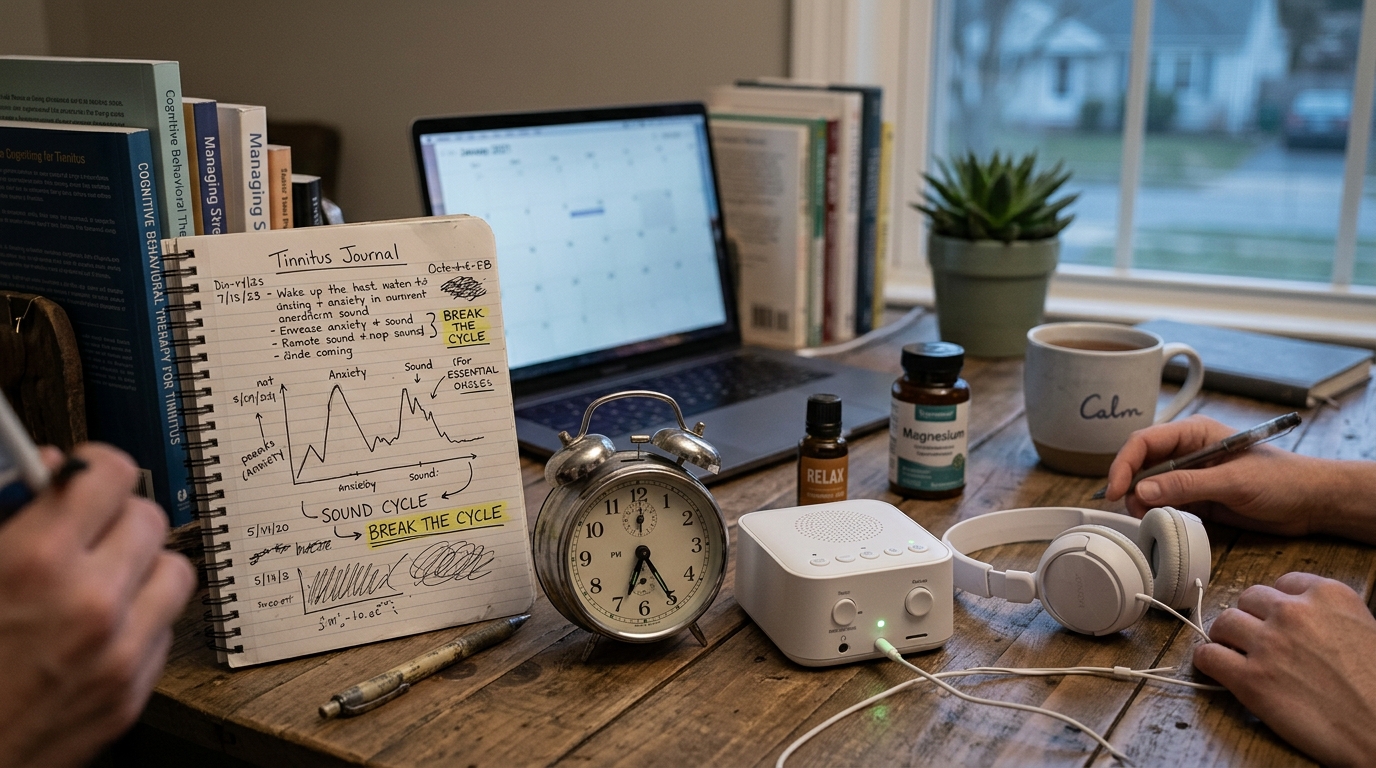
The Stress-Tinnitus Connection
Stress and anxiety dramatically exacerbate tinnitus perception. During stress, the nervous system becomes hypersensitive, amplifying awareness of background sounds. Additionally, stress activates inflammatory pathways potentially worsening underlying ear conditions.
The Anxiety Cycle
A common pattern emerges: tinnitus causes stress and anxiety, which amplifies tinnitus perception, increasing stress further. This cycle can make mild tinnitus feel severe.
Breaking the Cycle
Acceptance: Rather than fighting tinnitus, accepting its presence paradoxically reduces its perceived loudness. Cognitive behavioral therapy helps develop this perspective.
Attention Shifting: Deliberately focusing attention away from tinnitus reduces its salience. Engaging in absorbing activities naturally redirects focus.
Sound Masking: Background white noise, nature sounds, or masking apps provide competing stimuli preventing silence from emphasizing tinnitus.
Habituation: With consistent exposure and stress reduction, the brain naturally habituates to tinnitus, reducing its perceived prominence.
Stress Reduction Techniques
Meditation: Even brief daily meditation (10-15 minutes) significantly reduces stress and tinnitus awareness.
Progressive Muscle Relaxation: Systematically tensing and releasing muscle groups induces deep relaxation.
Breathing Exercises: Slow, deep breathing activates parasympathetic nervous system counteracting stress response.
Physical Activity: Exercise reduces stress hormones and improves emotional resilience.
Sleep Support: Quality sleep reduces stress and improves tinnitus management.
Professional Support
If anxiety severely impacts quality of life, psychotherapy and cognitive behavioral therapy (CBT) provide powerful tools for breaking the stress-tinnitus cycle.
Most people experiencing both tinnitus and anxiety notice significant improvement with stress management techniques applied consistently.
← Back to Home