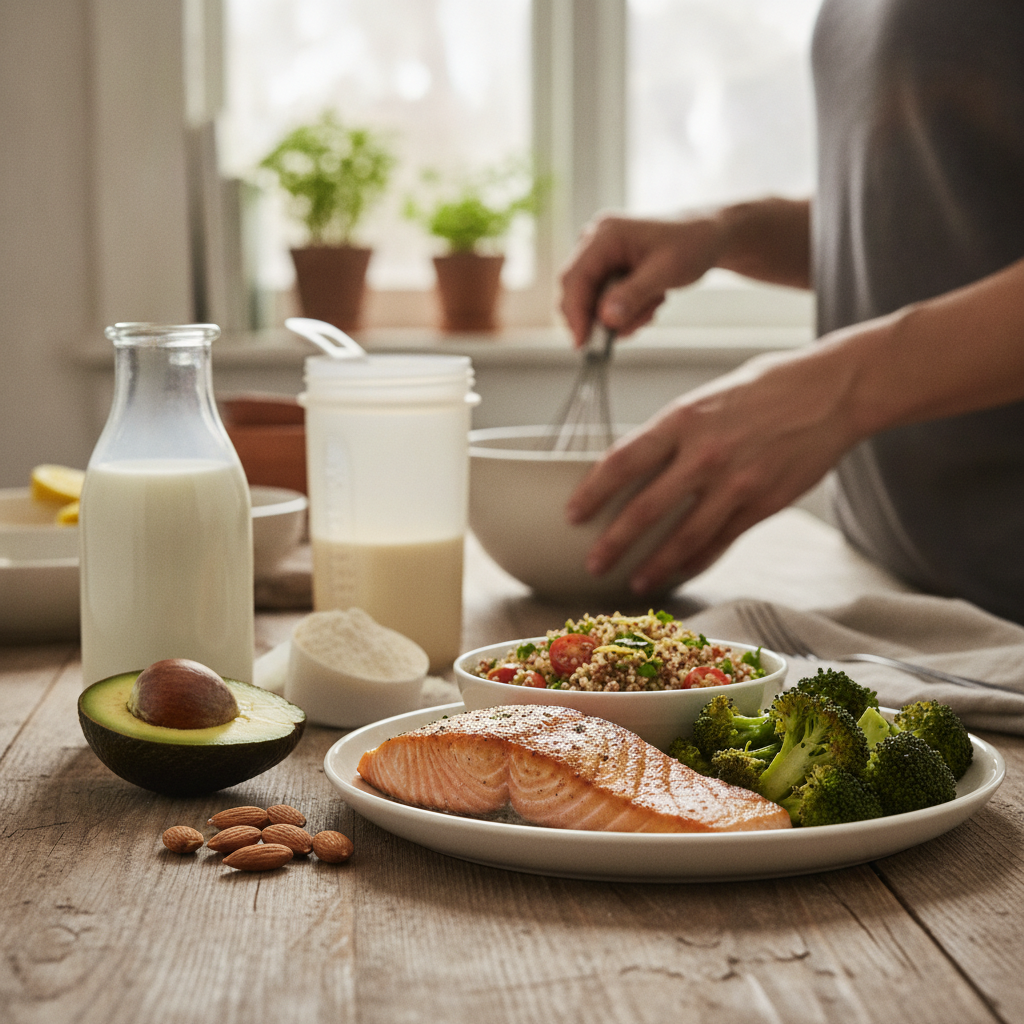
The Anabolic Window: Separating Fact from Fiction
The "anabolic window"—a small post-exercise period for maximum protein absorption—is exaggerated in fitness marketing. However, timing does matter; consuming protein within several hours post-workout optimizes muscle protein synthesis.
Protein Requirements for Athletes
Athletes requiring muscle gain should consume 1.6-2.2 grams of protein per kilogram of body weight daily. This amount should distribute across meals rather than concentrate in one post-workout shake.
Optimal Protein Quantity Per Meal
Each meal should contain 20-40 grams of quality protein. This range maximizes muscle protein synthesis stimulation. Consuming 100 grams in one meal provides less benefit than spreading that amount across multiple meals.
Timing Considerations
- **Pre-workout**: 20-30g protein 1-3 hours before exercise primes muscles
- **Post-workout**: 20-40g within 2 hours accelerates recovery
- **Throughout the day**: Consistent protein distribution optimizes total synthesis
Complete vs. Incomplete Proteins
Complete proteins contain all nine essential amino acids. Animal products, soy, quinoa, and hemp provide complete proteins. Combine incomplete plant proteins with complementary sources.
Practical Implementation
Calculate your daily target. Distribute evenly across 4-5 meals. Prioritize whole food sources: chicken, fish, eggs, Greek yogurt, legumes, nuts. Supplement with protein powder when convenience matters.
Individual Variations
Activity level, age, and training status affect protein needs. Older adults may benefit from slightly higher intake to combat age-related muscle loss. Sedentary individuals require less than athletes.
← Back to Home