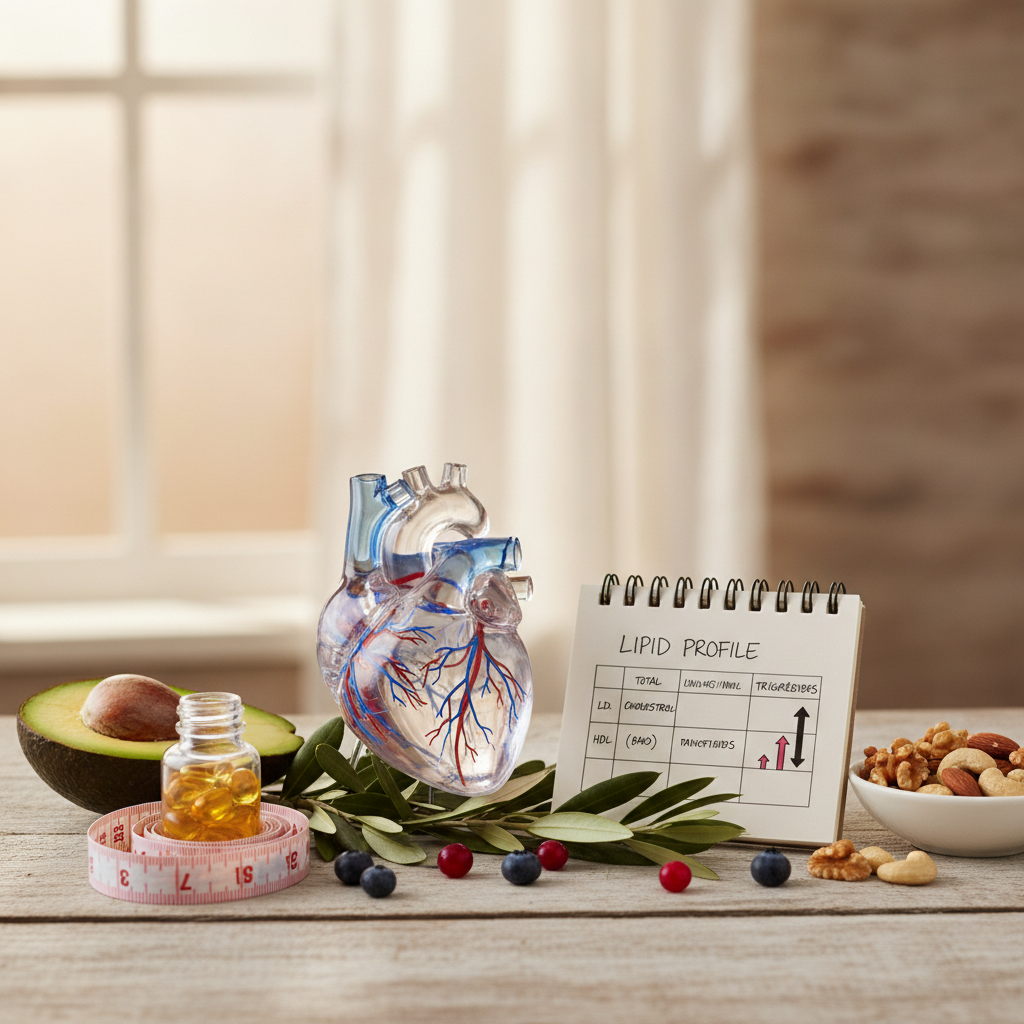
Lipid Profile Components
Total cholesterol represents the sum of all cholesterol types. HDL cholesterol protects against atherosclerosis through reverse cholesterol transport. LDL cholesterol accumulates in artery walls promoting atherosclerosis.
Triglycerides represent stored energy in blood. Elevated triglycerides indicate metabolic dysfunction and increase cardiovascular risk independently. Low triglycerides indicate metabolic health.
Calculating Cardiovascular Risk
LDL cholesterol reduction remains primary focus given strong causal relationship with atherosclerosis. Target LDL depends on individual risk: under 70 mg/dL for very high-risk individuals, under 100 mg/dL for most, and under 130 mg/dL for low-risk individuals.
HDL cholesterol above 40 mg/dL for men and 50 mg/dL for women provides protection. Higher values indicate greater protection. Triglycerides below 150 mg/dL indicate acceptable metabolic health.
Dietary Lipid Management
Saturated fat and dietary cholesterol increase LDL cholesterol. Limiting saturated fat to under 7% of calories and cholesterol to under 200 mg daily improves lipid profiles.
Plant-based foods, whole grains, and fish provide alternatives to saturated fat sources. Substituting plant sterols and fiber-rich foods reduces LDL cholesterol 5-10%.
Statin Medications
Statins inhibit cholesterol synthesis, reducing LDL cholesterol 25-50%. These medications consistently reduce cardiovascular events. Primary prevention with statins benefits higher-risk individuals. Secondary prevention after prior events reduces recurrence risk substantially.
Most individuals tolerate statins well. Muscle pain occasionally occurs, typically reversible upon discontinuation. Regular monitoring ensures optimal dosing.
Lifestyle Factors
Exercise raises HDL cholesterol and reduces triglycerides. Regular activity combined with appropriate diet improves lipid profiles as effectively as medication for many individuals. Alcohol moderation reduces triglycerides while excessive consumption worsens profiles.
Combination Therapy
Achieving optimal lipid profiles often requires combination approaches. Statins combined with ezetimibe or PCSK9 inhibitors achieve superior LDL reduction compared to monotherapy. Triglyceride management through lifestyle and medication (fibrates or fish oil) addresses multiple risk factors.
Regular Monitoring
Lipid screening every 4-6 years for adults beginning at 20 years old detects dyslipidemias early. More frequent monitoring occurs for those with abnormal values or on medication. Medication adjustments achieve optimal lipid targets.
← Back to Home